




You don’t usually wake up thinking about your water. It’s not something most of us obsess over. But then, one day, something feels off. Maybe your tap water smells faintly metallic, or your glassware always looks just a little cloudy, no matter how carefully you clean it.
At first, it’s easy to ignore. You adjust. You rinse again. You switch detergents. But when those small annoyances stick around, they start to feel less like coincidence and more like a pattern.
And that’s when you begin to realize—your water might need more attention than you’ve been giving it.
When “Good Enough” Water Stops Feeling Good Enough
Water quality isn’t always about obvious problems. It’s often about subtle inconsistencies. One day it tastes fine, the next day it doesn’t. Your skin feels dry after a shower, but only sometimes. Your appliances seem to struggle, but you can’t quite pinpoint why.
These aren’t urgent issues. They don’t demand immediate action. But they do create a kind of background discomfort—a sense that things could be better.
And honestly, they usually can be.
Why Generic Solutions Don’t Always Work
A lot of people start with simple fixes. A basic filter attached to the kitchen tap. Maybe a pitcher filter in the fridge. It helps, at least a little.
But then the same issues show up elsewhere. The bathroom. The laundry. The dishwasher.
That’s when it becomes clear—treating one tap doesn’t solve a whole-house problem.
This is where customized filtration systems begin to make sense. Instead of applying a general solution, these systems are built around your specific water conditions. What’s actually in your water? What needs to be removed? What doesn’t?
It’s not about adding more equipment. It’s about adding the right kind.
Understanding What Your Water Really Needs
Every water source is different. Some homes deal with excess minerals, others with chlorine, sediment, or even trace contaminants you can’t see or taste right away.
The challenge isn’t just identifying the problem—it’s choosing a solution that fits without overcomplicating things.
That’s why understanding your water is such an important first step. Once you know what you’re dealing with, everything else becomes more straightforward.
You’re no longer guessing. You’re making decisions based on reality.
The Role of Better Filtration Technology
As water treatment has evolved, so have the tools available. It’s not just about basic filters anymore. There are now more refined ways to target specific issues without affecting everything else.
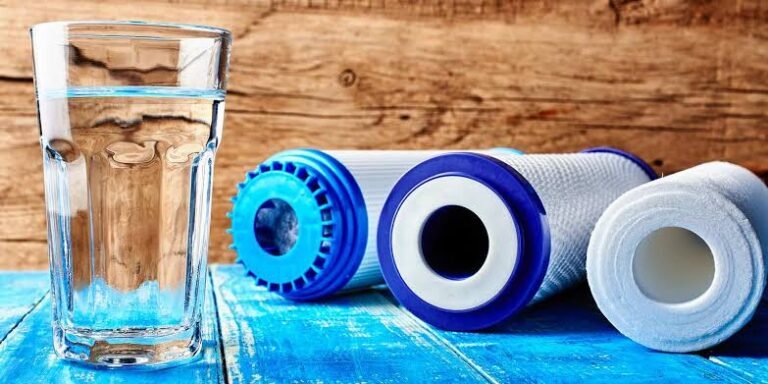
That’s where advanced media options come into play. These filtration materials are designed to handle particular contaminants—whether it’s iron, chlorine, sediment, or other impurities—more efficiently and with greater precision.
The benefit isn’t just cleaner water. It’s smarter filtration. You’re removing what needs to go, while keeping the balance of your water intact.
And that balance matters more than people think.
What Changes When Your Water Is Actually Right
Once your water is properly treated, the changes don’t hit you all at once. They show up gradually, in ways that feel almost effortless.
Your water tastes more neutral. Your skin feels less dry. Your dishes come out clearer. Even your home starts to feel fresher, though you might not be able to explain exactly why.
These are small improvements, but they affect your daily routine in meaningful ways.
And over time, those small changes become something you rely on.
The Difference Between “Clean” and “Comfortable” Water
Here’s something interesting—water can be technically clean and still feel uncomfortable to use.
Maybe it has a slight odor. Maybe it leaves a residue. Maybe it just doesn’t behave the way you expect it to.
That’s because water quality isn’t just about safety. It’s about usability. Comfort. Consistency.
When you address those factors, water stops being something you work around and starts being something that works with you.
Avoiding the Trap of Overdoing It
It’s easy to think that more filtration equals better results. More layers, more systems, more complexity.
But that’s not always true.
In fact, overcomplicating your setup can create new problems—higher maintenance, unnecessary costs, systems that are harder to manage.
The goal isn’t to build the most advanced system possible. It’s to build the right one. Something that solves your specific issues without adding extra hassle.
And when you get that balance right, everything else feels simpler.
Why Most People Wait Longer Than They Should
Water issues tend to sit in that grey area—not urgent enough to demand attention, but noticeable enough to cause frustration.
So people adapt. They clean more. They use different products. They replace things more often than they should.
It becomes part of the routine.
Until one day, it doesn’t feel worth it anymore.
And that’s usually when they decide to make a change.
A Quiet Upgrade That Stays With You
The thing about improving your water is that it doesn’t feel like a major renovation. There’s no dramatic before-and-after moment.
Instead, it’s a quiet shift.
Water starts behaving the way it should. Your home feels more comfortable. Your routines become easier.
And gradually, you stop thinking about it altogether.
Final Thoughts: When Water Finally Feels Like It Belongs
At the end of the day, water should feel natural. It should be something you trust without hesitation, something that fits seamlessly into your daily life.
If it’s not, it’s worth taking a closer look.
Because once you find the right solution—one that’s built around your needs, not someone else’s—the difference isn’t just in your water.
It’s in how your entire home feels.
And sometimes, that kind of quiet improvement makes all the difference.