




There’s something a little unsettling about seeing a washing machine shuffle across the floor like it’s trying to leave the room. One minute it’s humming, minding its business… the next, it’s thumping around like it’s got weekend plans. And if you’ve ever paused a TV show just to investigate a loud bang from the laundry room, you already know how distracting—and honestly, a bit ridiculous—it can be. But the truth is, a wandering washer is more common than people admit.
Whether you’re dealing with minor shaking or full-on appliance gymnastics, fixing it is usually easier than you think. So let’s talk about what causes the chaos and how to calm your machine down for good.
The Big Question: Why Is the Washing Machine Moving?
If you’ve ever wondered why your washer jerks and shifts during a cycle, you’re definitely not alone. A washing machine moving around the room doesn’t mean it’s possessed or defective—it’s simply responding to vibration, imbalance, or installation issues.
Most washers are designed to handle powerful spin cycles. But when the balance is off—even just slightly—those fast spins become unstable. And once a machine loses its footing, the momentum takes over. That’s when it starts hopping around.
Heavy loads, floors that aren’t level, or shock absorbers inside the machine wearing down over time can all make the situation worse. The good news? It’s all fixable, and usually without expensive repairs.
Start With the Easiest Fix: Balance the Load
You’d be surprised how often the problem comes down to something as simple as laundry distribution. If you toss in a bunch of towels or a few heavy jeans and they all clump to one side, your washer will fight to correct that imbalance. And if it can’t? It starts shaking like crazy.
Try mixing bulky items with smaller ones. If you’re washing a big blanket, pair it with lighter clothing to evenly distribute the weight. It’s a small habit that prevents a big headache.
And yes—this one alone solves the problem for a lot of people.
Check the Floor: Even Surfaces Matter More Than You Think
People rarely think about the floor beneath their washer, but tilt or slope can significantly worsen shaking. Even a slight unevenness can make a washer rock during high-speed spinning. Over time, that rock becomes a wobble, and the wobble becomes a walk.
If your laundry room has older wood floors or tile that’s not perfectly flat, placing a sturdy rubber mat or platform under your washer can help stabilize it.
Dryers don’t usually have this problem because they don’t spin with the same force. But washers? They feel everything.
Level the Feet—Seriously, This Fix Is Gold
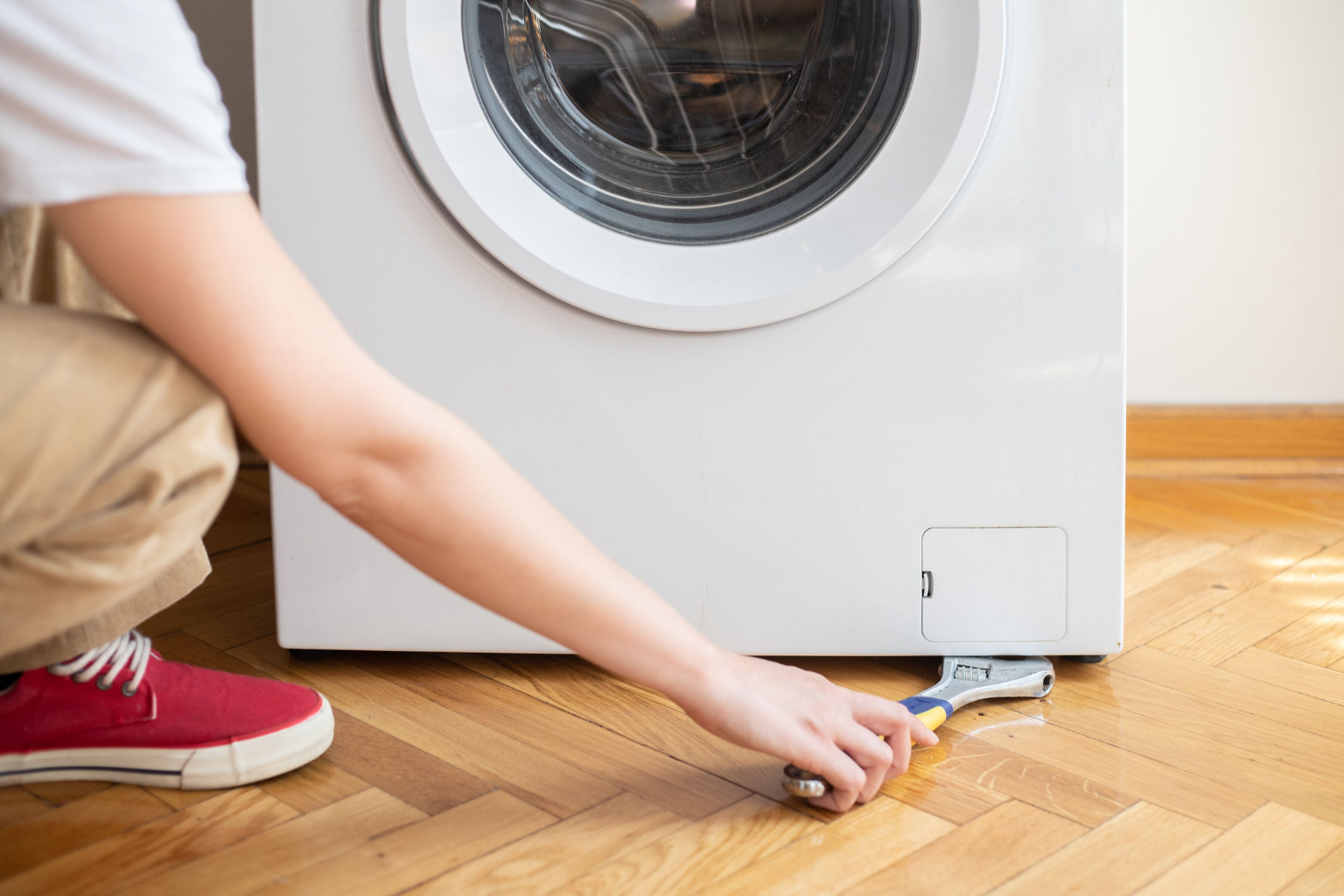
Every washer has adjustable feet that keep it steady. But with time, vibration, and use, these feet can move or become uneven. Sometimes installers rush. Sometimes we move the machine ourselves and knock it out of alignment without realizing it.
If you’ve been Googling how to keep washer from moving, start here.
Get down (yes, on the floor), grab the bottom edges of your washer, and give it a small shake. If it rocks—even slightly—you’ll need to adjust the legs until it stands firm. Turn the legs clockwise or counterclockwise to raise or lower them. Keep adjusting until there’s zero wobble.
It’s strangely satisfying when you get it right.
Anti‑Vibration Pads: The Unsung Heroes of Laundry Rooms
When leveling isn’t enough, anti‑vibration pads can work wonders. These small rubber or foam squares go under the washer’s feet and act like shock absorbers. They reduce noise, stop slipping, and prevent side‑to‑side movement.
If your washer sits on slick tile or polished hardwood, these pads are almost always worth the investment. They’re cheap, easy to install, and surprisingly effective.
Think of them as little gym shoes for your washer—grippy, supportive, and way better than letting it slide around barefoot.
When Your Washer Is “Walking” Because of Internal Wear
Sometimes, the issue isn’t external at all. Internal components like suspension rods, springs, or dampers can wear out after years of use. When that happens, the drum loses stability and every spin cycle turns into a mini earthquake.
If you’ve checked the floor, the legs, the load, and everything still shakes more than it should, internal wear might be the culprit.
Before you panic and call a technician, ask yourself: why does my washer move so much all of a sudden? If the shaking has noticeably gotten worse in recent months, it may point to worn shock absorbers.
Luckily, replacing them is often cheaper than buying a new machine—and it can restore your washer to near‑silent performance.
Don’t Forget the Shipping Bolts (If It’s a New Washer)
If your washer is brand‑new and shaking violently, there’s a possibility the shipping bolts were never removed during installation. These bolts keep the drum in place during transport but must be removed before first use.
Operating a washer with shipping bolts still attached guarantees excessive vibration, noise, and movement.
A quick look at the back of your machine can save you weeks of confusion.
Reposition Your Washer—Give It Some “Breathing Space”
Washers that are pushed too tightly against walls or cabinets have limited room to absorb movement. If it keeps banging against surfaces, the movement intensifies.
Giving the washer even one or two inches of clearance on each side can reduce noise and allow smoother vibration absorption.
It also helps protect your walls from dents and scuffs.
When It’s Time to Call a Technician
Most walking washer issues can be solved at home. But if you’ve tried everything—leveling, balancing, pads, adjusting loads—and nothing works, it may be time for a professional assessment.
A technician can inspect internal components, check for frame damage, and ensure the drum and suspension system are still intact.
Think of it like going to a chiropractor: sometimes alignment just needs a professional touch.
Final Thoughts: Keep Calm and Stop the Shake
A washing machine that wanders across the room might be frustrating, noisy, and a little chaotic—but it’s almost never a sign of something unfixable. With a little troubleshooting and a few adjustments, you can bring peace back to your laundry routine.